
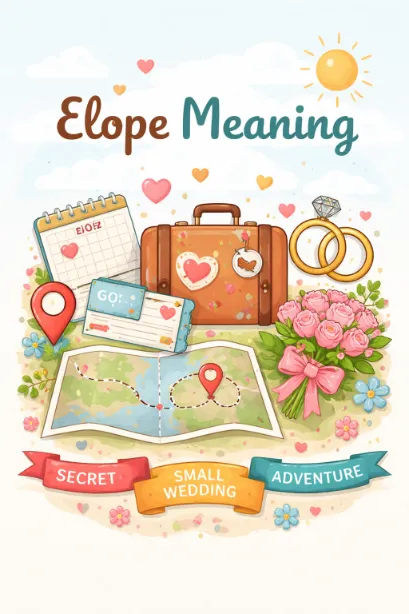
Elope refers to a couple leaving secretly to get married, usually without informing family or friends in advance. The term once carried a rebellious tone, tied to romance and urgency, yet modern usage presents it as a deliberate, intimate wedding choice. Today, many couples choose this path for privacy, simplicity, or emotional freedom rather than secrecy alone.
Origin and Evolution of the Word
The word “elope” traces back to the early 14th century, derived from Middle Dutch and Old English roots. Earlier usage linked it to running away from responsibility or escaping social norms. Over time, its meaning shifted toward romantic partnerships choosing to marry quietly.
In earlier centuries, eloping suggested disapproval from families or society. Now, it frequently signals a personal decision to avoid stress, costs, or expectations tied to traditional ceremonies.
Modern Meaning of Elope
In present-day usage, eloping does not always mean running away in secrecy. Many couples plan their elopement carefully, selecting scenic locations, arranging photography, and even informing close relatives afterward.
Elopement Important aspects:
- Small, private ceremonies
- Focus on the couple rather than guests
- Minimal or no formal planning stress
- Emotional authenticity over social display
This shift has transformed eloping into a respected and intentional wedding style rather than a last-minute escape.
Why Couples Choose to Elope
Couples today opt for elopement for several personal and practical reasons. Emotional clarity and financial flexibility often lead the decision.
Common motivations:
- Cost savings: Traditional weddings can be expensive
- Privacy: Some prefer intimate vows without large audiences
- Less pressure: Avoiding expectations from family or society
- Adventure: Destination elopements in mountains, beaches, or forests
- Focus on relationship: The day centers on the couple’s connection
This approach removes distractions and allows a more meaningful experience.
Traditional Wedding vs Elopement
| Aspect | Traditional Wedding | Elopement |
|---|---|---|
| Guest Size | Large (50–500+) | Very small or none |
| Cost | High | Low to moderate |
| Planning Time | Months to a year | Weeks or short planning period |
| Location | Venues, halls | Flexible (nature, courthouse) |
| Focus | Social gathering | Couple-centered |
| Formality | Structured rituals | Relaxed and personal |
This comparison shows why many couples lean toward elopement for simplicity and control.
Emotional Aspects of Eloping
Eloping carries strong emotional depth. Without the pressure of hosting guests, couples often feel more present in the moment. The vows feel personal, and the experience remains deeply memorable.
Benefits:
- Greater intimacy
- Reduced anxiety
- Freedom to express genuine feelings
- Stronger connection during the ceremony
Many couples later describe their elopement as peaceful and deeply fulfilling.
Incorrect notion About Eloping
Several myths still surround the concept of eloping. These misunderstandings can create confusion.
Common misconceptions:
- It means running away secretly forever
Reality: Many couples inform family later or celebrate afterward - It lacks meaning
Reality: Elopements often carry deeper emotional value - It is impulsive
Reality: Many elopements are carefully planned - It disrespects family
Reality: It simply prioritizes personal choice
Breaking these myths helps people see elopement as a valid and thoughtful option.
Legal Aspects of Elopement
Eloping still requires legal recognition to validate the marriage. Couples must follow local laws depending on the location.
Basic steps:
- Obtain a marriage license
- Have an officiant present (in most places)
- Sign required documents
- Register the marriage officially
Each country or region may have different rules, so checking local requirements remains essential.
Popular Elopement Ideas
Elopements allow creativity and freedom. Couples can design their day around personal preferences.
Important ideas:
- Mountain peak ceremonies
- Beachside vows at sunrise or sunset
- Forest or nature-based settings
- City courthouse weddings
- Destination travel elopements
This flexibility creates a unique and memorable experience.
Planning an Elopement
Planning an elopement may seem simple, yet thoughtful preparation enhances the experience.
Steps to plan:
- Choose a meaningful location
- Check legal requirements
- Arrange an officiant or witness
- Plan attire and photography
- Decide whether to inform family before or after
Keeping things simple yet organized helps avoid stress while preserving the spontaneity of the moment.
Cultural Perspective on Eloping
Different cultures view eloping in varied ways. In some societies, it still carries a rebellious tone. So, it has become widely accepted.
In modern global culture:
- Urban communities tend to accept elopement
- Younger generations favor personal choice
- Social media has normalized intimate weddings
This shift highlights changing attitudes toward marriage and individuality.
Pros and Cons of Eloping
Every decision carries advantages and challenges. Eloping offers clear benefits yet may also bring emotional considerations.
Pros:
- Lower cost
- Less stress
- More personal experience
- Flexible location choices
Cons:
- Possible family disappointment
- Lack of traditional celebration
- Limited shared memories with loved ones
Weighing these factors helps couples make a confident decision.
Elope Meaning in Digital Culture
Online platforms have reshaped how people view elopement. Photos and videos of intimate ceremonies inspire others to consider this path.
Trends seen online:
- Adventure elopements in remote locations
- Styled elopement shoots
- Storytelling through photography
- Minimalist wedding themes
Digital exposure has helped redefine elopement as a stylish and meaningful option.
Elope vs Secret Marriage
Though similar, these terms have slight differences.
- Elope: Focuses on the act of leaving to marry privately
- Secret marriage: May happen without informing anyone, even afterward
Elopement may later involve sharing the news or hosting a small celebration.
When Eloping Makes Sense
Eloping suits couples who value simplicity and authenticity. It aligns with those who prefer emotional depth over large gatherings.
Situations where eloping works well:
- Budget constraints
- Desire for privacy
- Family conflicts
- Preference for travel experiences
- Minimalist lifestyle choices
These factors often guide couples toward this decision.
Does eloping mean getting married without anyone knowing?
Not always. Some couples inform close relatives later or share the news after the ceremony.
Is eloping legal?
Yes, as long as legal requirements such as licenses and officiants are fulfilled.
Can you have guests at an elopement?
Yes, some couples invite a few close friends or family members.
Is eloping cheaper than a traditional wedding?
In most cases, yes. Costs remain lower due to fewer arrangements and guests.
Do couples regret eloping?
Many feel satisfied due to the intimacy and reduced stress, though some may miss celebrating with loved ones.
Can you celebrate later after eloping?
Yes, many couples host a reception or party afterward.
Is eloping a modern trend?
It has existed for centuries, yet modern styles have made it more popular again.