
When you sit in a dental chair, you want to trust the professional holding the drill. Patients often notice letters behind their dentist’s name on clinic signs. Understanding the dds meaning in dentistry helps you make informed choices about your personal oral health care.
A DDS title proves your doctor completed rigorous medical training. This degree guarantees they passed strict national board examinations. We will explain exactly what this title means for your teeth. You will learn the hidden history behind dental degrees in the United States.
What Does DDS Stand For In Dentistry
The Core Definition
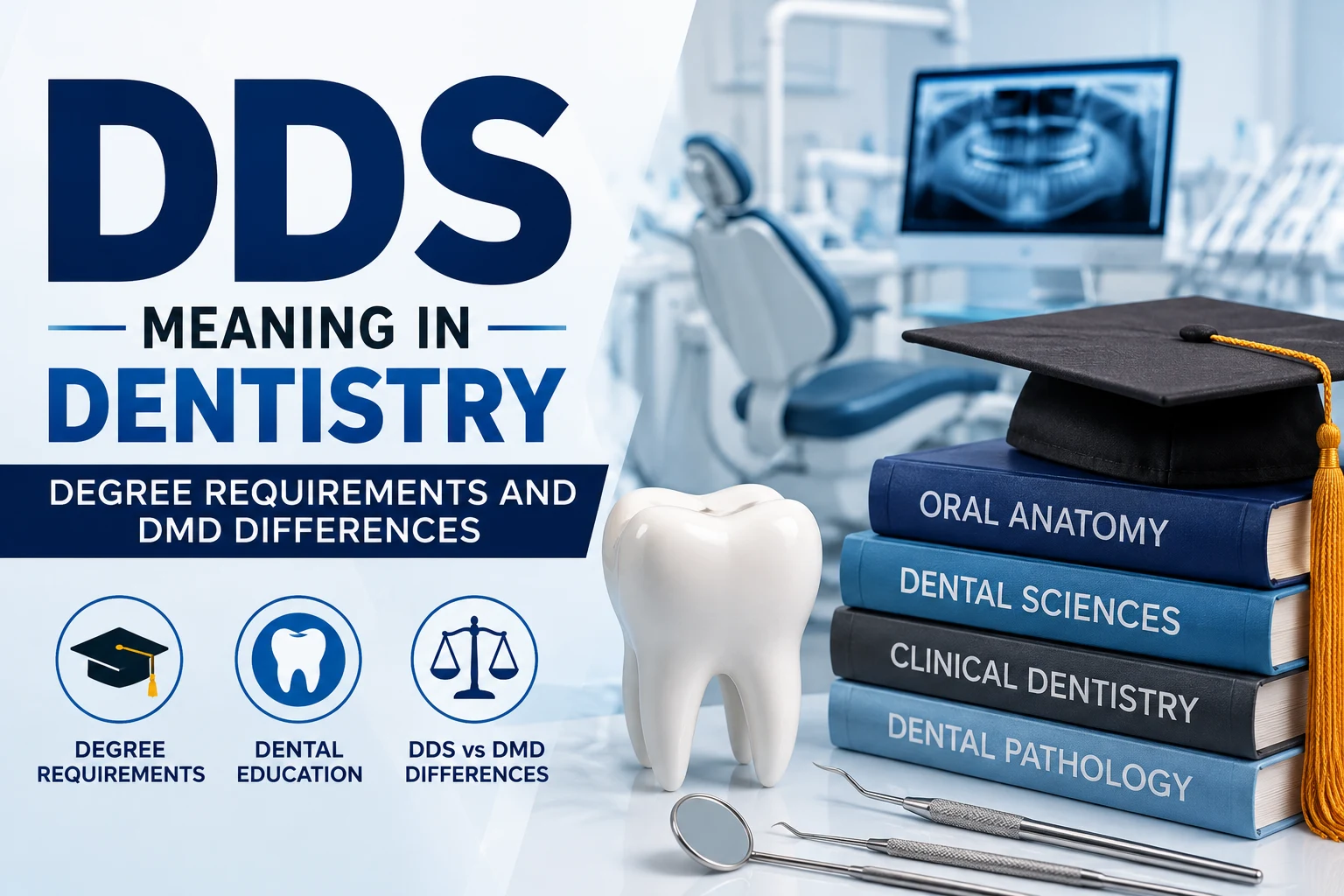
DDS officially stands for Doctor of Dental Surgery. It is one of the two standard degrees awarded by accredited dental schools. Graduates earn this title after finishing a highly demanding medical program.
Universities award this specific degree to general dentists. It shows the doctor has mastered the anatomy of the human mouth. They fully understand how oral health affects the entire human body.
The Scope Of Practice
A dentist with this degree handles all basic oral health needs. They diagnose diseases of the teeth, gums, and mouth tissue. They create long-term treatment plans to protect your beautiful smile.
These professionals safely administer local anesthetics during painful procedures. They fill cavities, extract rotten teeth, and install artificial crowns. They also prescribe antibiotics to fight dangerous oral infections quickly.
Recognizing Dental Credentials
You should always check a doctor’s credentials before booking an appointment. The American Dental Association recognizes this degree as the national standard. It proves the doctor possesses the skills needed for safe patient care.
You will see these letters printed on office doors and business cards. It serves as a public promise of professional medical competence. A valid degree means the local state medical board approved their license.
DDS Vs DMD: The Great Dental Debate
Doctor Of Dental Medicine
Many patients get confused when they see the DMD title instead. DMD stands for Doctor of Medicine in Dentistry. Sometimes it translates to Doctor of Dental Medicine.
People always ask if one degree is medically superior to the other. The truth is highly surprising to most regular patients. There is absolutely no difference between these two medical titles.
The Harvard Naming History
The confusion started at Harvard University back in 1867. Harvard awarded all its medical degrees in the Latin language. The Latin translation for dental surgery sounded awkward to the school deans.
They decided to invent the DMD title to make the Latin translation work perfectly. Since then, American universities simply pick one title or the other. It is just a historical naming preference for the specific university.
Which Degree Is Better
Neither degree outranks the other in any medical setting. Both programs force students to meet the exact same clinical requirements. Both require passing the exact same national board examinations.
You do not need to worry if your dentist has a DMD. They studied the exact same textbooks as their peers. Your dental care will be identical under either professional title.
The Extensive Dental Education Process
Undergraduate Degree Requirements
Becoming a dentist requires a massive commitment of time and money. Students must first earn a four-year undergraduate college degree. Most applicants choose difficult majors like biology or heavy chemistry.
Dental schools look for high grades in hard science classes. Students spend their college years preparing for the medical field. They must prove they can handle intense academic pressure.
The Dental Admission Test
Getting into dental school requires passing a very hard exam. This test is called the Dental Admission Test. It strictly tests scientific knowledge and visual perception skills.
Only the best students pass this difficult entrance exam. Dental students endure brutal schedules and often seek out the bumblebee jasper meaning to find new motivation during their hardest final exams. The competition for open seats at universities is extremely high.
Four Years Of Dental School
Accepted students face four more years of exhausting medical school. The first two years focus entirely on heavy classroom science. Students study human anatomy, biochemistry, and complex oral pathology.
They spend hundreds of hours studying the nerves of the human head. A tiny mistake in dentistry causes massive pain for the patient. The schools make sure students know every single facial nerve perfectly.
Clinical Training And Board Examinations
Hands-On Clinical Practice
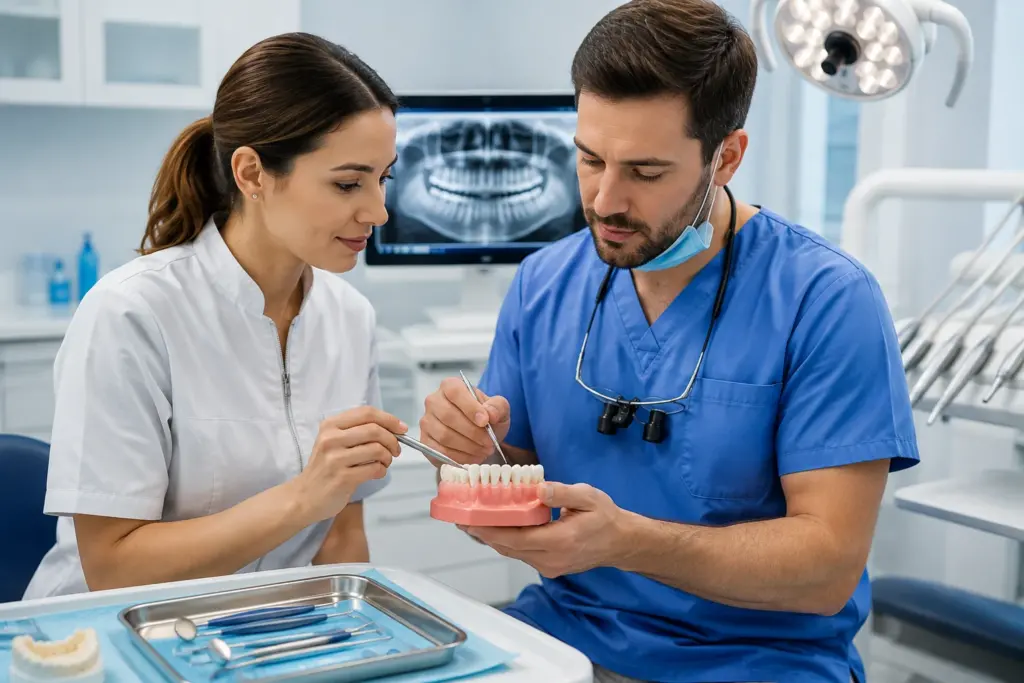
The final two years shift directly to actual patient care. Students practice their drilling skills on plastic teeth first. They eventually move on to treating real human patients under strict supervision.
Experienced doctors watch every single move the students make. They learn how to take perfect molds of human teeth. They practice pulling teeth safely without causing excess jaw bone damage.
National Board Dental Examinations
Graduation does not guarantee a medical license automatically. Every student must pass the National Board Dental Examinations. These tests cover both written medical theory and active clinical skills.
The exams are designed to be extremely stressful and hard. Dentists read oral x-rays much like a mechanic studies dodge ram dashboard symbols and meanings to diagnose hidden structural problems. The board ensures the doctor reads these signs flawlessly.
State Licensing Requirements
Passing the national boards is only the first big step. Every individual state has its own dental licensing board. The state board grants the final legal permission to practice medicine.
A dentist must apply for a new license if they move states. The states actively monitor doctors for any medical malpractice issues. They will revoke the license if the dentist harms patients on purpose.
The Financial Cost Of Dental Education
High Student Loan Debt
Graduating from a top medical program is incredibly expensive today. Students often borrow hundreds of thousands of dollars for their tuition. This massive financial debt places huge stress on young graduating doctors.
They must begin paying back these federal loans almost immediately. This financial reality forces many young dentists to work long weekend hours. It takes many years of hard work to finally become totally debt-free.
The Cost Of Clinic Equipment
Opening a brand new private clinic requires massive business loans. Professional medical chairs cost tens of thousands of dollars each. Digital imaging machines and sterilization units are also wildly expensive.
A doctor must purchase high-quality tools to ensure absolute patient safety. Cheap equipment breaks easily and ruins the daily clinic schedule. The high cost of modern technology directly impacts the price of dental procedures.
Running A Dental Business
Most general dentists are also small business owners in their towns. They must hire and manage a staff of hygienists and front desk workers. They handle complex employee payroll and expensive commercial real estate leases.
A great doctor must also possess very strong business management skills. They must balance patient care with the harsh realities of paying monthly bills. Many hire specialized accounting firms to manage their complex daily business taxes.
Dental Specialties Beyond General Practice
Continuing Education Programs
A general dentist can begin working immediately after passing their state boards. However, many choose to pursue specialized medical fields. This requires another two to six years of intense residency training.
They must re-enter school to master a highly specific area of the mouth. General dentists refer complex cases to these highly trained specialists. The extra schooling makes them absolute experts in their chosen field.
Becoming An Orthodontist
Orthodontists specialize in fixing crooked teeth and bad jaw alignments. They spend extra years learning how to move teeth safely with metal braces. They understand the exact physics of bone movement in the face.
This specialty prevents long-term jaw pain for growing children. They design clear aligners to fix adult smiles quietly. A general dentist rarely handles complex brace installations themselves.
Oral And Maxillofacial Surgery
Some procedures are too dangerous for a standard dental clinic. Oral surgeons handle extreme facial trauma and complex wisdom tooth removals. They train inside real hospital emergency rooms for several years.
Many anxious patients research the blue agate meaning to find natural ways to calm their nerves before a major dental extraction. The surgeon uses heavy intravenous sedation to keep these patients completely asleep. This specialty requires the most amount of extra medical schooling.
Choosing The Right Dentist For You
Verifying State Licenses
You should always verify your doctor has an active state license. Every state offers a free online database for checking medical credentials. You can easily search your doctor by their first and last name.
The database shows if they have any active malpractice lawsuits. It also confirms their exact graduation year and university name. This quick check takes five minutes and provides great peace of mind.
Reviewing Clinical Experience
Look for a doctor who actively pursues continuous medical education. Great dentists learn new techniques long after graduation day. They buy modern equipment to make treatments much less painful.
Ask friends and family for their personal clinic recommendations. A friendly bedside manner is just as important as a fancy degree. You need a doctor who actually listens to your painful symptoms.
Asking The Right Questions
Never feel shy about asking your doctor questions directly. Ask them why they recommend a specific expensive treatment. A good doctor will happily explain the medical reasons to you clearly.
Here are great questions to ask a new dentist:
- Where did you complete your dental school training?
- How do you handle patients with severe dental anxiety?
- What are the exact costs for this proposed treatment plan?
- Do you handle complex root canals here or refer them out?
Frequently Asked Questions
What Does DDS Stand For In Dentistry?
It stands for Doctor of Dental Surgery. It is a professional degree awarded to students who complete four years of dental school.
Is A DMD Better Than A DDS?
No, neither degree is better than the other. They require the exact same classes, clinical training, and national board examinations.
Can A General Dentist Perform Surgery?
Yes, they can perform minor oral surgeries like basic tooth extractions. They usually refer highly complex cases to specialized oral surgeons.
How Long Does It Take To Get This Degree?
It usually takes a total of eight years of college. This includes four years for a bachelor degree and four years of dental school.
What Is The Difference Between A Dentist And An Orthodontist?
A general dentist treats overall oral health and fixes cavities. An orthodontist completes extra schooling specifically to straighten teeth using braces.
Do Dental Degrees Expire?
The degree itself never expires after graduation. However, the doctor must renew their state medical license regularly through continuing education courses.
Final Takeaways
The dds meaning in dentistry represents nearly a decade of intense medical schooling and clinical practice. These doctors dedicate their lives to understanding the complex anatomy of the human mouth and face. Whether your doctor holds a degree in dental surgery or dental medicine, your teeth remain in highly capable hands. Both titles guarantee the professional passed the exact same rigorous national testing standards.
You should always feel confident asking your medical provider about their educational background and active state licenses. Great doctors love sharing their knowledge and making their patients feel completely safe in the dental chair. Prioritizing your oral health prevents massive medical bills and highly painful infections later in your life. Choose a professional who actively listens to your concerns and clearly explains every step of your treatment plan.