
Willow Tree Spider ranks among the most interesting arachnids found near damp gardens, woodland edges, ponds, and riversides. Nature lovers admire its thin legs, patterned body, and calm hunting behavior around willow branches. This spider adapts well to shaded outdoor spaces with moisture-rich surroundings.
Many people notice this species resting quietly on bark, hiding between leaves, or stretching silk across narrow gaps. Its appearance may seem alarming at first glance, yet the spider helps outdoor ecosystems by reducing insect activity around plants and water sources.
Physical Appearance of Willow Tree Spider
The Willow Tree Spider displays a slim body with long legs and earthy tones. Shades vary between brown, gray, olive, and pale yellow. Some specimens show darker markings across the abdomen.
Important physical traits appear below:
| Feature | Description |
|---|---|
| Body Size | Medium-sized spider |
| Color | Brown, gray, olive tones |
| Legs | Thin and lengthy |
| Habitat | Willow trees and damp vegetation |
| Activity | Mostly active at night |
| Diet | Flying insects and tiny bugs |
The body pattern helps the spider stay hidden among bark and leaves. Camouflage protects it from birds and larger predators.
Habitat and Preferred Environment
This spider thrives in moist outdoor locations. Willow trees create ideal shelter because their hanging branches trap humidity and attract insects.
Common habitats:
- Riverbanks
- Garden shrubs
- Marsh edges
- Wet woodland areas
- Pond surroundings
- Dense vegetation near trees
The spider rarely appears inside homes. Outdoor conditions suit its hunting habits far better than dry indoor air.
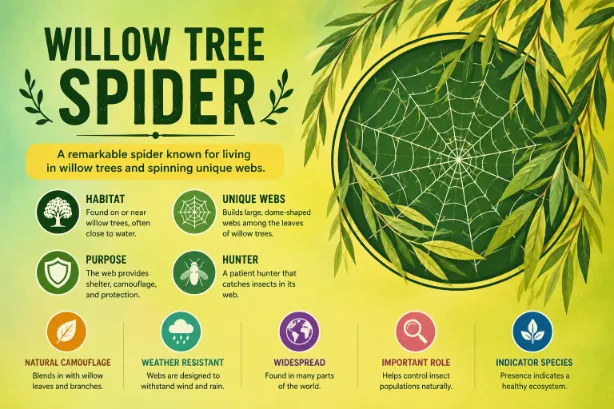
Hunting Style and Feeding Habits
The Willow Tree Spider feeds on insects trapped within its silk structure or caught during short ambush attacks. Mosquitoes, gnats, flies, and moths form a large part of its diet.
Unlike aggressive predators, this species waits patiently before attacking prey. The spider senses movement through silk vibrations and reacts quickly once prey enters reach.
Main food sources:
- Mosquitoes
- Small flies
- Gnats
- Tiny beetles
- Moths
- Leaf insects
Gardeners appreciate these spiders because they reduce pest numbers naturally.
Web Structure and Silk Patterns
Web patterns vary depending on location and weather conditions. Some spiders create irregular silk sheets between branches, while others use smaller trap lines near leaves.
The silk appears strong despite its thin appearance. Morning dew frequently reveals delicate patterns hanging from willow branches.
Important web traits:
| Web Feature | Details |
|---|---|
| Shape | Irregular or sheet-like |
| Placement | Between branches and leaves |
| Strength | Flexible yet durable |
| Main Purpose | Insect trapping |
| Visibility | Easier to spot during early morning |
Wind movement from willow trees creates ideal conditions for trapping flying insects.
Behavior During Day and Night
The Willow Tree Spider remains calm through daylight hours. Most activity starts after sunset as insect movement increases near damp plants and water.
During daytime, the spider hides:
- Under leaves
- Inside bark crevices
- Beneath branches
- Near folded foliage
At night, it moves carefully through webs searching for trapped prey.
This spider avoids conflict with humans and quickly retreats from disturbance.
Seasonal Activity
Warm months bring higher spider activity. Spring and summer create perfect breeding and feeding conditions due to rising insect populations.
Seasonal patterns:
| Season | Activity Level |
|---|---|
| Spring | Moderate |
| Summer | Very active |
| Autumn | Reduced movement |
| Winter | Minimal activity |
Cold weather slows movement considerably. Many spiders stay hidden during harsh winter periods.
Life Cycle of Willow Tree Spider
The spider develops through several growth stages before reaching maturity. Female spiders produce silk egg sacs and place them in protected locations near branches or dense leaves.
Life cycle stages:
- Egg sac stage
- Spiderling emergence
- Juvenile growth
- Adult stage
Young spiderlings spread through vegetation after hatching. Many travel short distances using silk threads moved by wind currents.
Adult females usually survive longer than males.
Relationship With Willow Trees
Willow trees create a natural shelter system for these spiders. Hanging branches provide shade, moisture, insect traffic, and safe nesting spots.
Benefits received from willow trees:
- Protection from sunlight
- Stable humidity
- Easy prey access
- Hidden nesting areas
- Reduced predator exposure
The spider forms part of the tiny ecosystem thriving around willow vegetation.
Difference Between Willow Tree Spider and Common Garden Spiders
People sometimes confuse this spider with standard garden orb-weavers. Several physical and behavioral traits separate them.
| Trait | Willow Tree Spider | Garden Orb-Weaver |
|---|---|---|
| Body Shape | Slim | Rounder abdomen |
| Habitat | Damp willow areas | Gardens and fences |
| Web Style | Irregular | Circular orb web |
| Activity | Mostly nighttime | Active during day and night |
| Color | Earthy muted tones | Brighter markings |
Accurate identification depends on habitat, body pattern, and web design.
Are Willow Tree Spiders Dangerous?
Most Willow Tree Spiders pose little threat to humans. Their venom helps immobilize insects but rarely affects people seriously.
Possible reactions from a bite:
- Mild redness
- Temporary irritation
- Minor swelling
- Short-term discomfort
Bites remain uncommon because the spider avoids direct contact.
Basic safety tips:
- Avoid handling wild spiders
- Wear gloves during heavy gardening
- Shake outdoor clothing before use
- Keep calm during encounters
Medical attention becomes necessary only after unusual allergic reactions.
Role in Garden Ecosystems
This spider supports healthy plant environments by controlling insect populations naturally. Chemical-free pest reduction benefits flowers, shrubs, and vegetables.
Environmental advantages:
- Reduces mosquito activity
- Limits harmful insects
- Supports biodiversity
- Helps natural balance
- Protects nearby plants
Many wildlife experts encourage people to leave harmless spiders undisturbed outdoors.
Signs of Willow Tree Spider Presence
Several clues help identify nearby spider activity around willow trees and damp vegetation.
- Thin silk strands between branches
- Small insects trapped in webs
- Hidden spiders beneath leaves
- Activity near evening hours
- Egg sacs attached to bark
Morning moisture makes webs easier to spot.
Predators and Threats
Despite their camouflage, these spiders face danger from birds, reptiles, insects, and weather changes.
- Birds
- Wasps
- Lizards
- Frogs
- Larger spiders
Environmental threats also reduce survival rates.
| Threat | Effect |
|---|---|
| Heavy rain | Web destruction |
| Pesticides | Population decline |
| Habitat removal | Loss of shelter |
| Birds | Predation |
| Dry weather | Reduced activity |
Natural vegetation helps protect spider populations.
Interesting Traits About Willow Tree Spider
Nature enthusiasts admire several unusual characteristics linked to this species.
- Excellent camouflage ability
- Sensitive vibration detection
- Fast reaction speed
- Strong silk production
- Calm defensive behavior
Its quiet lifestyle keeps it hidden from many outdoor visitors.
How to Protect Willow Tree Spiders Naturally
Healthy outdoor habitats help these spiders survive successfully.
Simple protection methods:
- Reduce pesticide usage
- Preserve damp garden areas
- Maintain natural shrubs
- Avoid unnecessary web removal
- Plant moisture-friendly vegetation
Balanced ecosystems support insects, birds, and spiders together.
Willow Tree Spider in Photography and Nature Study
Wildlife photographers enjoy capturing these spiders during early mornings. Dew-covered webs create striking outdoor images.
- Use natural sunlight
- Focus on web patterns
- Capture moisture droplets
- Approach slowly
- Avoid damaging vegetation
Nature researchers also study these spiders to observe insect control patterns within wet habitats.
The Willow Tree Spider remains a fascinating outdoor species linked closely with damp vegetation and willow branches. Its slim appearance, nighttime activity, and insect-hunting behavior make it an important part of natural ecosystems.
Despite common fear surrounding spiders, this species supports gardens and outdoor environments by limiting unwanted insect populations. Gentle observation from a safe distance allows people to appreciate its role in nature without disturbance.