
Australia shelters many unusual spiders across forests, wetlands, riversides, and grassy terrain. Among those hunters, the swamp spider earns attention due to its size, movement, and habitat. Many people spot this spider near water, reeds, muddy banks, or damp vegetation. Its appearance may appear alarming at first glance, yet this arachnid mainly hunts insects and smaller aquatic life.
Swamp spiders belong to a group linked with fishing spiders. They move rapidly across water surfaces and damp ground. Their body structure supports strong movement through marshy terrain. Large legs, sharp eyesight, and quick reactions assist survival across rough surroundings.
This guide explains habitat, behavior, diet, appearance, reproduction, and safety details linked with swamp spiders across Australia.
Physical Appearance Of Swamp Spider Australia
Swamp spiders display a large body with long legs and earthy coloring. Brown, grey, tan, and dark markings assist camouflage among reeds, bark, and muddy surfaces.
| Feature | Description |
|---|---|
| Body Length | Around 2 to 4 centimeters |
| Leg Span | Up to 15 centimeters in larger females |
| Main Colors | Brown, grey, tan, black patterns |
| Eye Arrangement | Large forward-facing eyes |
| Habitat Style | Wetlands, creeks, marshes |
| Hunting Method | Active hunting without webs |
Females usually appear larger than males. Hair across the legs helps grip slippery surfaces near water. Some species display pale bands across legs or abdomen.
Habitat Across Australia
Swamp spiders live throughout many Australian regions. Damp areas provide suitable shelter and food sources.
Common locations:
- Swamps
- Wetlands
- Riverbanks
- Mangroves
- Ponds
- Marshes
- Flooded grasslands
- Rainforest edges
Queensland and northern New South Wales report frequent sightings due to humid surroundings. Tropical and subtropical regions support healthy spider populations.
These spiders hide beneath logs, rocks, bark, reeds, or thick vegetation during daylight hours. Night activity appears more common because cooler temperatures support hunting.
Hunting Style And Feeding Habits
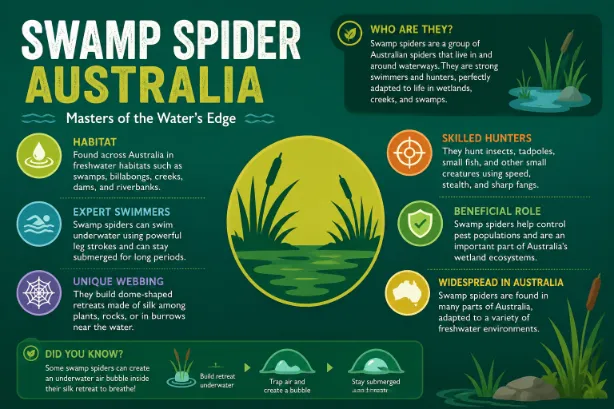
Swamp spiders hunt without spinning prey-catching webs. Instead, they stalk prey through stealth and speed.
Their diet features:
- Mosquitoes
- Flies
- Beetles
- Small frogs
- Tadpoles
- Aquatic insects
- Small fish
- Crickets
Some swamp spiders run across water surfaces with impressive balance. Tiny hairs along their legs trap air and reduce sinking. Rapid movement helps capture prey before escape.
Strong jaws inject venom into prey. Venom quickly weakens insects and small animals. Afterwards, digestive fluids soften tissues for feeding.
Behavior Near Humans
Many Australians encounter swamp spiders near gardens, pools, sheds, or outdoor lights close to damp terrain. Their large size may create fear, yet aggressive behavior rarely appears.
These spiders prefer escape rather than confrontation. Sudden movement from humans may trigger defensive posture, though actual biting remains uncommon.
Behavior patterns:
- Active mainly at night
- Fast runners
- Strong climbers
- Good swimmers
- Defensive only during threat
Outdoor campers and hikers may notice eye shine from torchlight at night. Their reflective eyes create a glowing effect.
Venom And Bite Details
Swamp spiders possess venom used for hunting prey. Human danger remains low for most species.
Possible bite symptoms:
- Mild pain
- Redness
- Swelling
- Local irritation
- Temporary nausea in rare cases
Severe reactions rarely appear. Medical support helps reduce discomfort after any spider bite.
First aid steps:
- Wash the bite area gently.
- Apply a cool pack.
- Rest the affected limb.
- Monitor symptoms.
- Visit a doctor during strong pain or allergic reaction.
Children and people with allergies should receive extra care after bites from any spider species.
Reproduction And Life Cycle
Female swamp spiders produce egg sacs protected beneath vegetation or attached near damp shelter areas. Maternal protection appears strong among many species.
The life cycle follows several stages:
| Stage | Details |
|---|---|
| Egg Sac | Hundreds of eggs inside silk casing |
| Spiderlings | Tiny young spiders emerge |
| Juvenile Growth | Several molting phases |
| Adult Stage | Mature hunters ready for breeding |
Young spiderlings spread through vegetation after early growth. Survival depends upon food supply, moisture, and predator avoidance.
Birds, reptiles, frogs, and larger spiders prey upon juvenile swamp spiders.
Difference Between Swamp Spiders And Huntsman Spiders
Many people confuse swamp spiders with huntsman spiders due to leg span and body size. Several differences separate both species groups.
| Trait | Swamp Spider | Huntsman Spider |
|---|---|---|
| Habitat | Wetlands and marshes | Houses, bark, forests |
| Water Movement | Strong swimmer | Limited swimmer |
| Hunting Area | Near water | Dry surfaces |
| Body Pattern | Earthy camouflage | Flatter appearance |
| Activity Zone | Damp terrain | Trees and buildings |
Huntsman spiders frequently enter homes. Swamp spiders stay closer to moist outdoor surroundings.
Ecological Role In Wetland Areas
Swamp spiders assist environmental balance through insect control. Mosquito populations decline due to active predation. This benefit supports healthier wetland ecosystems.
Several ecological contributions:
- Reduces pest insects
- Supports food chains
- Helps natural balance
- Serves as prey for birds and reptiles
- Controls aquatic insect numbers
Wetland destruction threatens numerous species across Australia. Healthy marshes support spider survival along with frogs, fish, insects, and native birds.
Popular Species Linked With Australian Wetlands
Australia shelters various spider species linked with swampy terrain. Fishing spiders from the Dolomedes group appear among the most familiar.
Traits linked with fishing spiders:
- Long legs
- Water-running ability
- Strong eyesight
- Fast hunting reactions
- Camouflage coloring
Some species wait beside water for movement from insects or tiny fish. Sudden attacks occur within seconds.
Myths And Misunderstandings
Large spiders frequently trigger exaggerated rumors. Swamp spiders face many myths across social media and casual discussion.
Common myths:
- Every large spider in Australia ranks deadly
- Swamp spiders chase humans
- Their venom causes severe medical emergencies
- They attack pets without reason
Reality appears far calmer. Most swamp spiders avoid humans and focus upon hunting small prey.
Education helps reduce fear surrounding Australian wildlife. Respectful distance supports safer interaction for both people and spiders.
Tips For Avoiding Unwanted Encounters
Outdoor areas near water may attract swamp spiders searching for prey.
Helpful prevention ideas:
- Remove standing water near homes
- Clear thick debris near sheds
- Shake camping gear before use
- Wear gloves during garden work
- Use outdoor lighting carefully
- Seal gaps around doors
Campers should inspect shoes, sleeping bags, and clothing after outdoor activity near marshes.
Photography And Wildlife Interest
Wildlife photographers admire swamp spiders due to dramatic movement and natural camouflage. Macro photography reveals detailed leg textures, eye patterns, and water movement.
Best viewing periods usually appear after sunset near wetlands. Patience and safe distance assist better photography.
Nature groups across Australia document spider sightings for biodiversity records. Citizen science projects support research linked with wetland species.
Climate And Seasonal Activity
Warm temperatures increase spider movement around wetlands. Rainy periods create ideal conditions due to higher insect activity.
During dry periods, some swamp spiders relocate toward permanent water sources. Dense vegetation helps maintain moisture levels necessary for survival.
Heavy flooding may temporarily shift local spider populations toward higher ground.
Why Swamp Spiders Matter In Australia
Australian wetlands support rich biodiversity. Swamp spiders serve an active role inside that natural network. Their hunting behavior controls insect populations and supports predator-prey balance.
Fear frequently overshadows appreciation for spiders. Yet these arachnids assist natural systems through daily feeding activity.
Researchers study wetland spiders to learn more about ecosystem health, prey movement, and environmental change.
Are swamp spiders dangerous to humans?
Most swamp spiders create mild symptoms after bites. Serious medical reactions remain uncommon.
Can swamp spiders walk on water?
Yes. Many species move rapidly across water surfaces through specialized leg hairs and lightweight body structure.
Where do swamp spiders live in Australia?
They live near wetlands, marshes, creeks, ponds, mangroves, and rainforest edges.
Do swamp spiders make webs?
They use silk mainly for egg sacs and shelter rather than prey-catching webs.
What do swamp spiders eat?
Their diet features insects, tadpoles, beetles, crickets, and tiny aquatic animals.
How large do swamp spiders grow?
Large females may reach leg spans near 15 centimeters.