
The word “nakama” carries a rich emotional and cultural sense rooted in the Japan language and social values. It goes far beyond a simple translation like “friend” or “colleague.” People use it to describe a strong connection shaped by shared experiences, trust, and mutual respect.
This term appears in daily conversation, workplaces, anime, and global pop culture, yet many still miss its deeper sense. Below, you’ll find a clear and engaging breakdown of what “nakama” truly expresses, how people use it, and why it resonates worldwide.
What Does Nakama Mean?
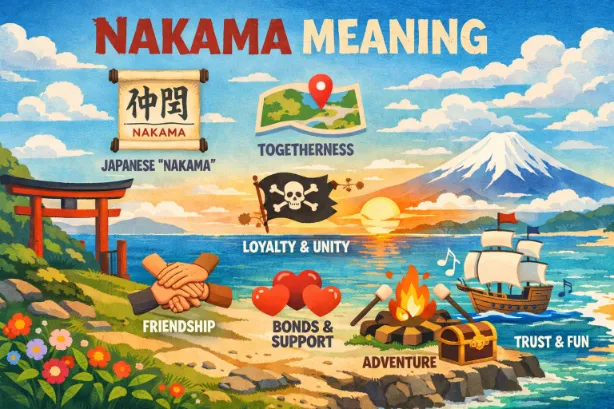
“Nakama” (仲間) refers to a group of people connected through shared goals, experiences, or a sense of belonging. It can describe friends, teammates, coworkers, or even companions on a journey.
At its core, the word communicates:
- Shared purpose
- Emotional connection
- Loyalty within a group
- A sense of “we” rather than “I”
Unlike basic friendship terms, “nakama” carries a deeper emotional layer tied to unity and trust.
Simple Translation vs True Meaning
| Aspect | Basic Translation | True Sense |
|---|---|---|
| Word | Friend / Companion | Trusted circle |
| Depth | Surface-level | Emotional and social depth |
| Usage | Casual | Context-driven |
| Feeling | Neutral | Loyalty and belonging |
A direct translation misses the emotional weight. That’s why many fans of Japanese media prefer to keep the original word instead of translating it.
Cultural Roots of Nakama
In Japan society, group harmony plays a major role. People value cooperation, shared effort, and respect within a group. “Nakama” fits perfectly into this mindset.
You’ll notice this concept in:
- School clubs working together
- Office teams sharing responsibility
- Sports groups striving toward victory
- Community activities and traditions
The word reflects how individuals connect within a group rather than standing alone.
Nakama in Everyday Life
People use “nakama” in various real-life situations. It doesn’t belong only to fiction or media.
Common examples:
- Coworkers collaborating on projects
- Friends who support each other through challenges
- Teammates training and competing together
- Travel companions sharing experiences
The feeling grows stronger through shared effort and time.
The Role of Nakama in Anime and Pop Culture
The term gained global popularity through anime, especially One Piece. The main character Monkey D. Luffy frequently uses “nakama” to describe his crew.
For him, it means more than friendship. It represents loyalty, trust, and standing by each other no matter the situation.
Other anime also use this word to express strong group connections:
- Naruto
- Fairy Tail
- Attack on Titan
Fans across the world adopted the term because no single English word fully captures its emotional depth.
Nakama vs Other Japanese Relationship Words
Japanese language has many terms for relationships, each with a slightly different tone.
| Word | Meaning | Emotional Depth |
|---|---|---|
| Tomodachi | Friend | Casual |
| Nakama | Group companion | Deep connection |
| Kazoku | Family | Strongest personal tie |
| Dōryō | Coworker | Professional |
“Nakama” sits between friendship and family. It creates a sense of chosen connection rather than biological ties.
Emotional Layers Behind Nakama
The strength of this word lies in its emotional layers:
- Trust built through shared experiences
- Loyalty during difficult situations
- Mutual respect among group members
- A feeling of belonging
People don’t label someone as “nakama” instantly. It grows over time.
Why People Around the World Use Nakama
Global audiences embraced this word because it expresses something that English lacks—a mix of friendship, teamwork, and loyalty in one term.
Reasons for its popularity:
- Anime and manga exposure
- Emotional connection to characters
- Desire for deeper expressions of friendship
- Cultural curiosity
Today, fans, gamers, and online communities frequently use it.
The Importance of Nakama in Teamwork and Leadership
In professional or group settings, the idea of “nakama” can shape stronger teams.
Leaders who adopt this mindset focus on:
- Shared success instead of individual credit
- Open communication
- Mutual support
- Respect for every member
Teams with this approach tend to build stronger relationships and better results.
Examples of Nakama in Sentences
To better grasp how people use it, here are simple examples:
- “We trained together for years; they are my nakama.”
- “No matter what happens, my nakama stand with me.”
- “This team feels like nakama, not just coworkers.”
These sentences show emotional closeness beyond casual friendship.
In Gaming Communities
Gamers also use the word widely, especially in multiplayer environments.
You’ll see it in:
- Guilds and clans
- Online teams
- Cooperative missions
Players use “nakama” to describe trusted teammates who support each other during gameplay.
Differences Between Friendship and Nakama
Here’s a clearer breakdown:
- Friendship can exist without shared goals
- Nakama forms through shared purpose
- Friendship may remain casual
- Nakama carries deeper loyalty
- Friendship focuses on individuals
- Nakama focuses on the group
This distinction explains why the word resonates so strongly.
Modern Usage Outside Japan
Outside Japan, people use “nakama” mainly in:
- Anime fan communities
- Social media discussions
- Gaming groups
- Creative projects
Its usage keeps growing, especially among younger audiences who connect through shared interests.
Psychological Side of Nakama
Humans naturally seek belonging. The idea behind “nakama” connects with this basic need.
Benefits of having a “nakama”-like group:
- Emotional support
- Stronger confidence
- Better teamwork
- Reduced loneliness
This explains why the concept feels so powerful across cultures.
Nakama in Storytelling and Media
Writers use this concept to create strong group dynamics. Characters described as “nakama” often show:
- Loyalty during hardship
- Willingness to sacrifice for each other
- Deep emotional connections
- Shared dreams
This makes stories more engaging and relatable.
What does nakama mean in English?
The closest meanings are “companion,” “teammate,” or “friend,” but none fully express its emotional depth tied to loyalty and shared purpose.
Is nakama stronger than friendship?
Yes, in many contexts. It suggests deeper trust and shared experiences rather than casual friendship.
Can coworkers be called nakama?
Yes. Coworkers working closely toward shared goals can be described as “nakama,” especially in team-driven environments.
Why do anime characters use nakama instead of friend?
Writers use the term to express stronger emotional connections that English translations cannot fully capture.
Is nakama used in real life or only in anime?
People use it in real life across Japan in workplaces, schools, and social groups.