
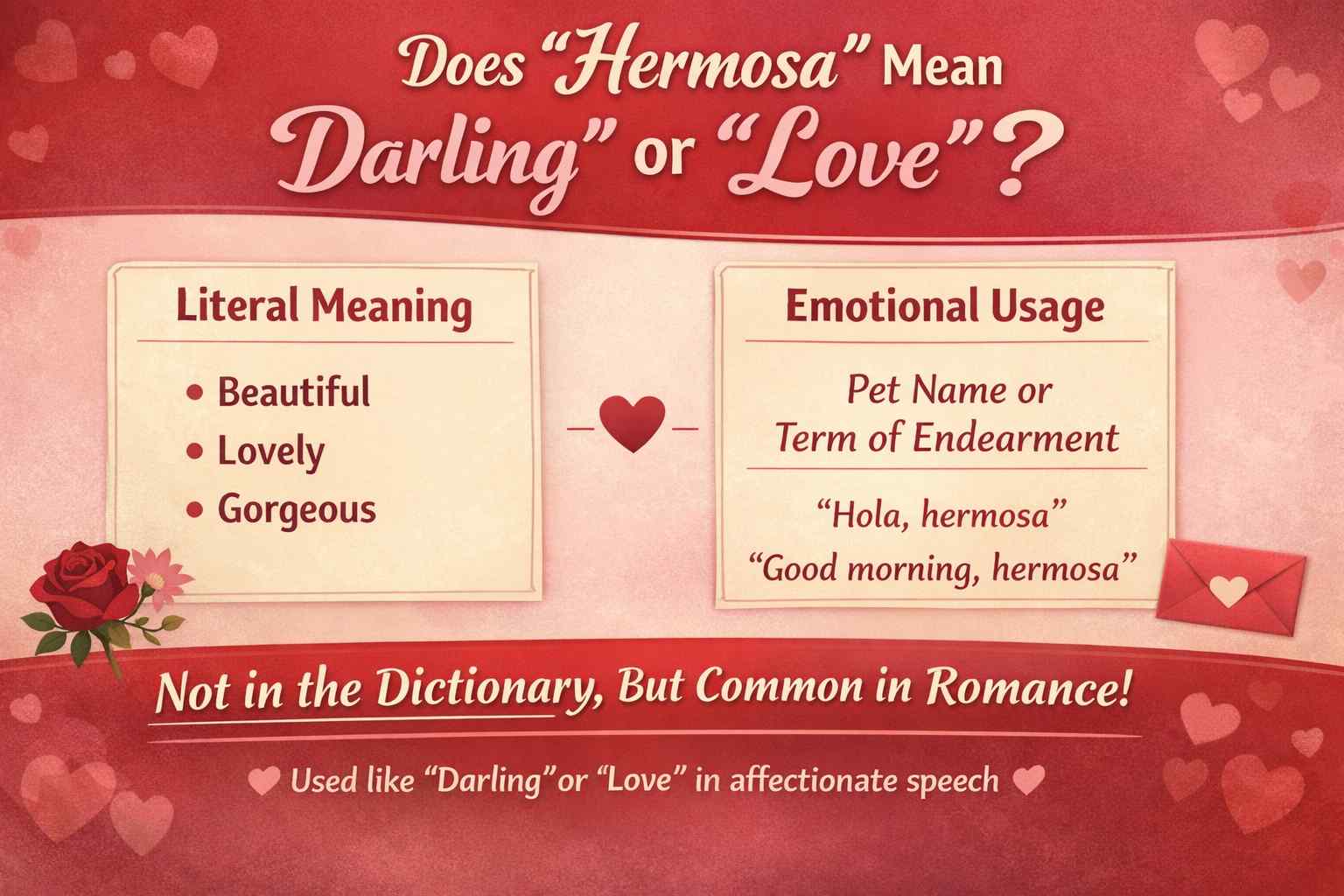
In English usage, “hermosa” appears in translations, bilingual conversations, literature, and place names. While “beautiful” is the closest direct equivalent, the tone of “hermosa” feels softer and more affectionate. In heartfelt expressions, the word can function as a term of endearment, similar to “darling” or “my love,” especially when addressing a woman directly.
Direct Translation of Hermosa
| Spanish Word | English Meaning | Usage Context | Gender Form |
|---|---|---|---|
| Hermosa | Beautiful | Feminine nouns | Feminine |
| Hermoso | Beautiful / Handsome | Masculine nouns | Masculine |
| Muy hermosa | Very beautiful | Strong admiration | Feminine |
| Tan hermosa | So beautiful | Emotional emphasis | Feminine |
Spanish adjectives change form based on gender. “Hermosa” modifies feminine nouns, while “hermoso” pairs with masculine nouns.
Examples:
- La casa es hermosa – The house is beautiful
- Ella es hermosa – She is beautiful
- La vista es hermosa – The view is lovely
Emotional Meaning Behind Hermosa
Hermosa captures beauty that extends into emotional depth. It conveys:
- Warm admiration
- Appreciation of nature
- Respect for inner grace
Spanish speakers feels it personal rather than mechanical. English speakers translate it as “beautiful,” though the emotional tone may feel richer in Spanish.
In romantic settings, calling someone “hermosa” expresses admiration and affection in a gentle way.
Hermosa in Loving Expressions
In relationships, “hermosa” works as a compliment. It conveys attraction without sounding overly formal.
Examples in conversation:
- Buenos días, hermosa – Good morning, beautiful
- Te ves hermosa hoy – You look beautiful today
- Eres hermosa por dentro y por fuera – You are beautiful inside and out
The phrase appears in Latin music and poetry. Artists such as Romeo Santos and Shakira use similar language in lyrics to convey affection and admiration.
For Place Names
Interestingly, Hermosa appears in many geographic locations. In these cases, it describes natural beauty or scenic charm.
Hermosa Beach
A coastal city in California, Hermosa Beach translates to “Beautiful Beach.” The name highlights ocean views, sandy shores, and relaxed coastal life.
Vista Hermosa
Vista Hermosa means “Beautiful View.” The phrase appears across Spanish-speaking regions to describe scenic landscapes.
In place names, “hermosa” signals visual appeal, pleasant surroundings, and natural charm.
Cultural Tone of Hermosa
Spanish culture values expressive language. Words like “hermosa” create warmth in conversation.
In daily life, someone may say:
- Qué hermosa mañana – What a beautiful morning
- Qué hermosa sonrisa – What a beautiful smile
The word applies to:
- Nature
- Art
- Fashion
- Architecture
- Personal appearance
Its flexibility makes it powerful. It adapts to both poetic language and casual speech.
Difference Between Hermosa and Bonita
Within Spanish vocabulary, multiple words describe beauty. “Hermosa” and “bonita” both translate as “beautiful,” yet they differ slightly in tone.
| Word | English Equivalent | Tone | Depth |
| Hermosa | Beautiful / Gorgeous | Emotional, intense | Strong |
| Bonita | Pretty / Nice | Light, casual | Moderate |
Yeah, “Hermosa” expresses deeper admiration. “Bonita” feels lighter and more playful.
For example:
- Ella es bonita – She is pretty
- Ella es hermosa – She is truly beautiful
The second phrase carries more emotional weight.
Literary and Poetic Usage
Writers frequently use “hermosa” in poetry and novels. Because of this, it enhances imagery and tone.
Classic Spanish literature and modern Latin music rely on expressive adjectives. Authors such as Gabriel García Márquez used rich descriptive language that includes beauty-related terms like “hermosa” to elevate emotional scenes.
In poetry, the word pairs with:
- Moonlight
- Flowers
- Eyes
- Love
- Memories
Its rhythm also flows smoothly in Spanish verse, which makes it popular in songwriting.
Grammar Rules for Using
To use “hermosa” correctly, follow these grammar rules:
- Pair it with feminine nouns
- Place it after the noun in most sentences
- Adjust intensity using adverbs
Examples:
- La niña hermosa – The beautiful girl
- Una flor hermosa – A beautiful flower
- Extremadamente hermosa – Extremely beautiful
Spanish adjectives agree in gender and number. The plural feminine form becomes hermosas.
- Las montañas hermosas – The beautiful mountains
Synonyms of Hermosa in English
English provides several alternatives depending on context:
- Beautiful
- Gorgeous
- Lovely
- Stunning
- Attractive
- Elegant
- Radiant
Each carries a slightly different shade of meaning. “Gorgeous” suggests glamour. “Lovely” feels gentle. “Radiant” implies brightness and glow.
Situations Where it Fits Best
Use “hermosa” in these scenarios:
- Complimenting a woman
- Describing scenery
- Praising art
- Writing poetry
- Expressing affection
Avoid using it with masculine nouns unless you switch to “hermoso.”
In professional settings, it appears less frequently. Casual and personal environments favor it more.
Pronunciation Guide
Phonetically, hermosa sounds like: er-MOH-sah
Stricture:
- Her – soft “h” sound (almost silent in Spanish)
- Mo – stressed syllable
- Sa – gentle ending
The stress falls on “mo.”
Correct pronunciation adds authenticity in conversation.
Similar Phrases with Hermosa
- Mi hermosa vida – My beautiful life
- Hermosa mujer – Beautiful woman
- Ciudad hermosa – Beautiful city
- Noche hermosa – Beautiful night
These phrases appear in greeting cards, poetry, and sincere messages. Their presence in music, literature, and place names keeps the term alive in global culture. From Hermosa Beach to lyrics by Latin artists, the expression retains its emotional charm.