
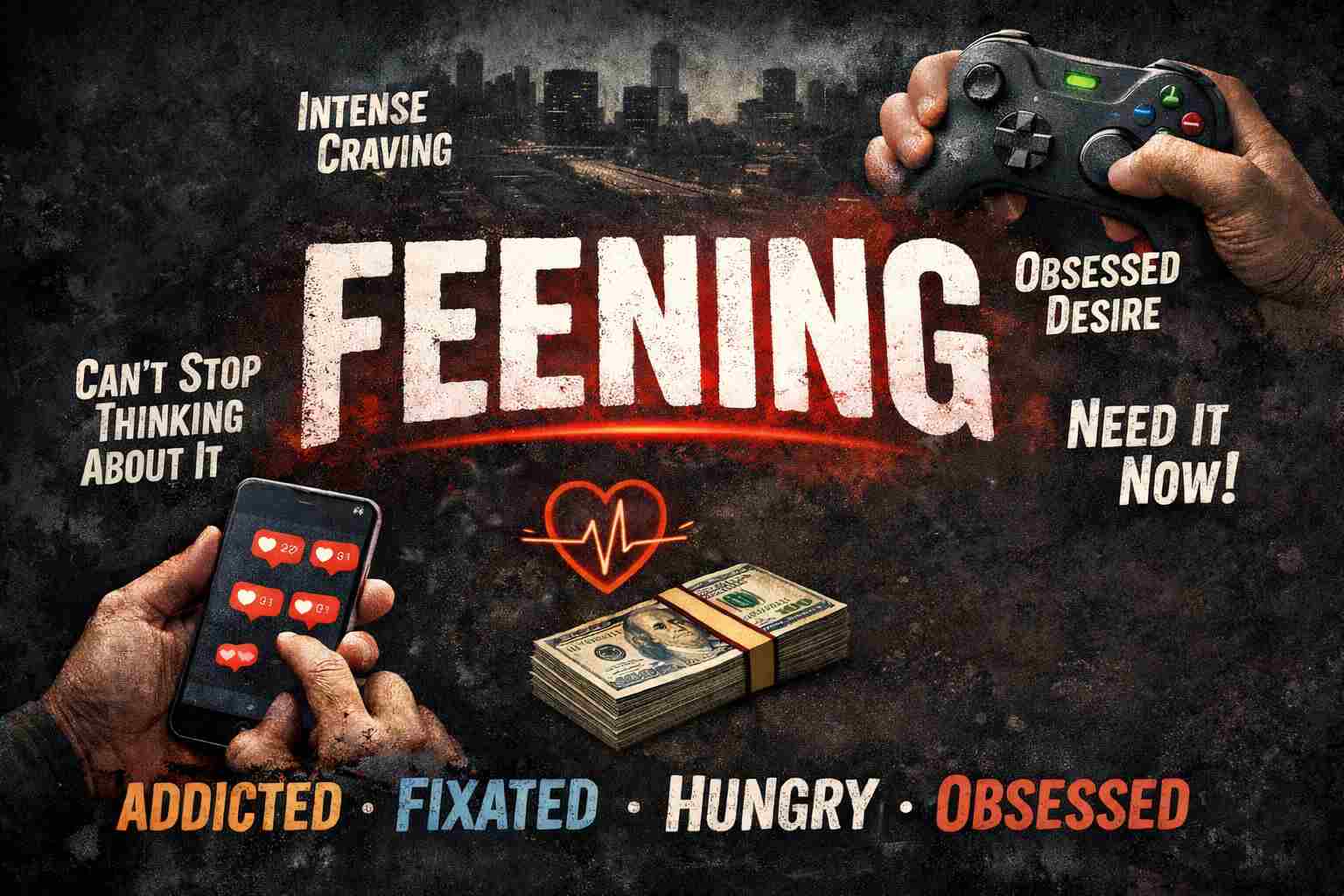
Feening describes an intense state of craving driven by obsession, fixation, or dependency. The term appears in street slang, online culture, and music lyrics to label behavior fueled by an overpowering urge. Usage signals a lack of restraint and an ongoing pull toward a desired object, activity, or person. The word carries a raw tone, suggesting compulsion rather than casual interest.
In conversation, feening highlights urgency. A speaker uses it to stress that the desire dominates attention and actions. The expression leans informal and emotionally charged, placing it far from academic language yet deeply rooted in lived experience.
Definition of Feening
Semantically, feening means acting under the pressure of a strong craving. That craving may target substances, habits, digital interactions, or relationships. The word frames the subject as restless and persistent, pushing past moderation.
Elements Tied to the Definition:
- A powerful urge
- Repeated attempts to satisfy that urge
- Reduced patience or restraint
- Emotional intensity tied to the desire
By its roots, Feening traces back to urban slang, shaped by spoken language rather than formal dictionaries. It likely evolved from “fiend,” a word long tied to addiction and extreme desire. Over time, pronunciation shifted, spelling adapted, and the meaning expanded beyond substance use.
Primary Contexts of Usage
Feening appears across multiple settings, each shaping tone and intent. Context decides whether the word sounds playful, serious, or cautionary.
Popular usage environments
- Casual speech among friends
- Social media captions and comments
- Song lyrics emphasizing hunger or need
- Gaming chats describing obsession with wins or gear
In lighter settings, the term exaggerates desire for humor. In serious talk, it hints at unhealthy patterns.
Emotional Tone Behind Feening
Emotion drives the word’s strength. Feening communicates restlessness, impatience, and fixation. Speakers select it to exaggerate how deeply a desire grips them.
Emotions tied to feening:
- Frustration from unmet urges
- Excitement mixed with tension
- Anxiety tied to delay
- Relief after satisfaction
Feening vs Casual Wanting
Conceptually, feening marks a sharper edge than simple wanting. A casual desire allows delay. Feening pushes for immediate relief.
| Casual Wanting | Feening | |
| Intensity | Mild to moderate | Extreme |
| Patience | Present | Minimal |
| Emotional charge | Low | High |
| Behavioral push | Flexible | Forceful |
Cultural Usage and Social Meaning
Cultural groups shape how feening sounds and feels. In some circles, it signals humor. In others, it warns about obsession. The shared understanding within a group determines meaning.
Social roles of the term:
- Humor through exaggeration
- Solidarity through shared slang
- Warning sign about dependency
- Emphasis on passion or hunger
That flexibility keeps the word alive in conversation.
Digital Media and Online Speech
Online spaces accelerated feening’s spread. Short messages and memes favor bold words that compress emotion. Feening fits perfectly into that pattern.
Online Stuff linked to the word:
- Meme captions showing obsession
- Hashtags amplifying craving themes
- Comment sections reacting to hype
- Viral phrases repeating urgency
Digital repetition reinforces the term without formal promotion.
Psychological Angle of Feening
From a psychological lens, feening points to reward-driven behavior. The brain chases dopamine linked to satisfaction. Repetition strengthens that chase.
Behavioral patterns connected to it:
- Fixation on one source of pleasure
- Difficulty shifting attention
- Heightened response to triggers
- Temporary relief followed by renewed urge
Positive and Negative Connotations
Feening carries mixed tones. Some speakers use it proudly to express passion. Others apply it critically.
Positive Shades
- Intense motivation
- Strong enthusiasm
- Commitment to a goal
Negative Shades
- Loss of balance
- Dependency signals
- Emotional strain
Tone depends on delivery and setting.
Feening in Music and Entertainment
Artists use feening to compress emotion into lyrics. The word paints hunger, desire, and obsession in a single stroke. Music culture helped spread it across regions and age groups.
Entertainment usage:
- Emphasis on raw emotion
- Rhythm-friendly slang
- Relatable intensity
- Street credibility
Misuse and Overstatement
Overuse can drain meaning. Applying feening to mild preferences weakens its force. The term thrives on exaggeration grounded in genuine intensity.
Clear signals of misuse:
- Describing mild likes
- Applying it to one-time interests
- Using it without emotional context
Social Perception and Judgment
Listeners react strongly to the term. It frames behavior as intense, sometimes reckless. That framing invites judgment or empathy depending on relationship and tone.
Possible listener reactions:
- Laughter in friendly chats
- Concern in serious talks
- Recognition through shared experience
- Discomfort tied to excess
Feening in Everyday Speech
In daily language, feening works best sparingly. Speakers choose it to underline urgency rather than fill space.
Effective speech placement:
- Emphasizing impatience
- Highlighting obsession
- Adding humor through exaggeration
Restraint preserves its punch.
Different Aspects of Feening
| Meaning | Intense craving or fixation |
| Tone | Informal, emotionally charged |
| Origin | Slang influenced by “fiend” |
| Usage | Speech, music, online culture |
| Connotation | Passionate or excessive |
For now, Feening remains a sharp piece of modern slang. It captures urgency, obsession, and emotional pull in one compact word. Speakers rely on it to stress intensity rather than mild interest. Its power lies in selective use, cultural awareness, and emotional honesty.