
The glamping economy has transformed outdoor tourism by bringing comfort, luxury, and nature together in one experience. Travelers no longer need to choose between a traditional hotel stay and outdoor adventure. Glamping combines both, creating a thriving market that attracts investors, tourism operators, property owners, and travelers from various income groups.
Luxury tents, treehouses, eco-pods, yurts, safari lodges, geodesic domes, and cabin retreats now form a major segment of the hospitality sector. This sector generates revenue through accommodations, food services, activities, wellness packages, and local tourism partnerships.
How the Glamping Economy Works
The glamping economy revolves around premium outdoor accommodations placed in natural settings. Guests pay higher nightly rates than traditional camping because they receive hotel-style comfort while staying close to nature.
Revenue streams within this economy consist of:
- Accommodation bookings
- Food and beverage services
- Guided outdoor activities
- Wellness retreats
- Event hosting
- Wedding venues
- Corporate retreats
- Local tourism packages
Property owners generate income by transforming land into attractive outdoor destinations. Tourism boards also benefit through increased visitor spending in nearby communities.
Market Structure of the Glamping Economy
| Segment | Revenue Source |
|---|---|
| Luxury Tents | Nightly stays |
| Treehouses | Premium accommodation |
| Eco-Lodges | Sustainable tourism |
| Domes & Pods | Unique travel experiences |
| Safari Camps | Adventure tourism |
| Wellness Retreats | Health-focused packages |
| Event Spaces | Weddings and corporate bookings |
This structure creates opportunities for entrepreneurs who possess land, hospitality experience, or tourism expertise.
Why Travelers Spend More on Glamping
Modern travelers value experiences more than material purchases. A glamping stay delivers privacy, scenery, comfort, and memorable moments.
Several factors drive spending:
- Instagram-worthy locations
- Luxury amenities
- Eco-friendly environments
- Family-friendly experiences
- Remote work retreats
- Wellness escapes
- Romantic getaways
Guests willingly pay premium prices for accommodations that create memorable experiences and strong emotional connections with nature.
Economic Benefits for Rural Areas
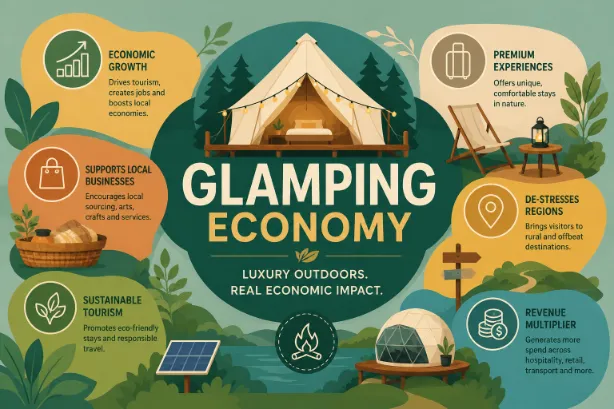
Many glamping destinations operate in rural regions where tourism previously generated limited revenue. New glamping developments create jobs and stimulate local business activity.
Benefits for rural communities:
- New hospitality jobs
- Increased restaurant sales
- Higher demand for local products
- Additional transportation services
- Greater tourism spending
- Seasonal employment opportunities
Local artisans, guides, farmers, and transportation providers frequently benefit from visitor spending.
Technology and the Glamping Economy
Technology supports nearly every aspect of modern glamping operations.
Operators use:
- Online booking systems
- Mobile check-in tools
- Digital marketing campaigns
- Smart security systems
- Solar-powered technology
- Guest management software
Many sites utilize automation to manage reservations, pricing, customer communication, and operational tasks. This approach reduces labor costs while improving guest experiences.
Sustainability as a Revenue Driver
Environmental responsibility attracts many glamping guests. Travelers increasingly prefer accommodations that respect natural surroundings.
Popular sustainable practices:
- Solar energy systems
- Rainwater collection
- Composting toilets
- Recycled construction materials
- Local sourcing programs
- Waste reduction initiatives
These practices reduce operating expenses while appealing to environmentally conscious travelers.
Types of Businesses Benefiting from Glamping
The glamping economy extends beyond accommodation providers.
Businesses that profit from this sector:
| Business Type | Economic Benefit |
|---|---|
| Local Restaurants | Visitor spending |
| Tour Operators | Guided activities |
| Transportation Services | Guest transfers |
| Farmers | Local food supply |
| Event Planners | Weddings and retreats |
| Wellness Professionals | Spa and yoga services |
| Equipment Suppliers | Accommodation setup |
A single glamping destination can support multiple businesses within its surrounding area.
Investment Opportunities in the Glamping Economy
Investors view glamping as an attractive hospitality niche due to lower startup costs compared to many traditional hotels.
Popular investment categories:
- Luxury tent resorts
- Eco-tourism projects
- Glamping franchises
- Private land developments
- Wellness retreat centers
- Adventure tourism facilities
Some operators start with only a few units and expand gradually as occupancy rates increase.
Challenges Facing the Glamping Industry
Despite strong demand, operators face several challenges.
Common obstacles:
- Weather-related disruptions
- Seasonal demand fluctuations
- Land regulations
- Infrastructure costs
- Maintenance expenses
- Staffing shortages
- Environmental restrictions
Successful operators plan carefully and maintain financial reserves to manage these challenges effectively.
Role of Social Media in Market Expansion
Social media platforms play a major role in attracting guests. Beautiful outdoor accommodations generate high engagement rates through photos and videos.
Marketing channels frequently used by glamping businesses:
- TikTok
- YouTube
User-generated content acts as free promotion. Guests frequently share photos of unique accommodations, helping destinations attract new visitors.
Wellness Tourism and Glamping
Wellness tourism contributes strongly to glamping revenue. Many travelers seek peaceful environments away from crowded cities.
Popular wellness activities:
- Yoga sessions
- Meditation retreats
- Nature walks
- Digital detox programs
- Spa treatments
- Outdoor fitness classes
These services increase average spending per guest while enhancing the overall travel experience.
Future Outlook for the Glamping Economy
Demand for experiential travel remains strong across many regions. Travelers increasingly prioritize privacy, unique accommodations, and outdoor environments.
Future trends may involve:
- Smart luxury tents
- Renewable energy systems
- AI-powered guest services
- Expanded wellness packages
- Remote-work destinations
- Eco-friendly accommodation designs
Tourism developers continue investing in innovative outdoor hospitality concepts that attract modern travelers.
Revenue Drivers Within the Glamping Economy
The most profitable glamping businesses usually generate income from multiple sources rather than accommodation alone.
Major revenue drivers:
- Nightly stays
- Premium upgrades
- Adventure packages
- Food and beverage sales
- Wellness services
- Photography sessions
- Event bookings
- Merchandise sales
Diversified revenue streams strengthen financial performance and reduce dependence on seasonal bookings.
The glamping economy represents a powerful segment of modern tourism. Luxury outdoor accommodations create opportunities for entrepreneurs, investors, local communities, and travelers alike. Through experiential travel, sustainable practices, technology integration, and premium guest experiences, this sector contributes substantial economic value across many regions. As consumer preferences shift toward nature-focused travel with modern comforts, glamping remains a profitable and expanding part of the global hospitality market.