
The ancient world left behind many remarkable discoveries, yet few compare to the beauty and mystery linked with the Montelirio tholos tomb beads. Archaeologists uncovered these beads inside a prehistoric burial chamber near Seville in Spain. Their craftsmanship, color, and placement inside the tomb reveal details about ritual practices, social rank, and artistic skill from thousands of years ago.
Researchers examined these ornaments for decades. Each bead provides a small but valuable clue about life during the Copper Age on the Iberian Peninsula. The collection ranks among the most impressive archaeological jewelry discoveries from prehistoric Europe.
The Location of the Montelirio Tholos Tomb
The Montelirio tholos tomb sits within the Valencina archaeological zone near Seville. This ancient settlement stretched across a vast area and served as one of the largest prehistoric communities in western Europe.
Archaeologists date the tomb to around 2800–2600 BCE. The structure features a long corridor leading toward circular chambers formed with stone slabs. Such tombs served ceremonial and funerary purposes for elite members of society.
The burial site contained numerous decorative objects:
- Crystal daggers
- Ivory artifacts
- Amber ornaments
- Gold pieces
- Thousands of beads
The bead collection remains one of the tomb’s most remarkable discoveries.
Why the Beads Matter
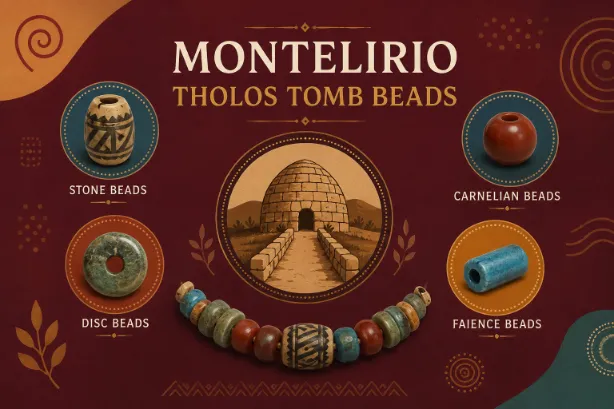
The Montelirio beads reveal advanced craftsmanship from prehistoric Iberia. Ancient artisans shaped tiny pieces with impressive precision despite limited tools.
Researchers discovered beads made from several materials:
| Material | Appearance | Possible Source |
|---|---|---|
| Amber | Golden-orange | Coastal trade routes |
| Shell | White or cream | Marine environments |
| Stone | Green, black, or red | Local and imported regions |
| Crystal | Transparent | High-status ceremonial use |
These decorative objects suggest active trade networks across distant regions. Communities exchanged valuable materials over large distances long before formal kingdoms emerged.
The bead arrangement inside the tomb also points toward ceremonial symbolism connected with burial traditions.
Discovery Inside the Tomb
Excavation teams uncovered the beads among human remains and ceremonial goods. Many appeared near the bodies of women buried inside the chamber.
Researchers believe elite priestesses or high-ranking women occupied the tomb. Their clothing likely featured elaborate bead decorations sewn into garments or worn as necklaces.
The quantity astonished archaeologists. Thousands of tiny pieces rested inside the chamber, many preserved after centuries underground.
Several scholars connected the ornaments with ritual authority. Decorative attire may have symbolized spiritual status within the community.
Craftsmanship Behind the Beads
Creating these beads demanded patience and technical skill. Ancient artisans shaped, polished, and perforated tiny materials by hand.
The process likely involved:
- Grinding rough material into shape
- Smoothing surfaces with abrasive stone
- Drilling holes using primitive rotary tools
- Polishing each bead for decorative finish
Such labor required many hours. The enormous number discovered inside the tomb suggests organized production rather than casual decoration.
Researchers also studied microscopic wear patterns. These studies revealed that many beads saw real use before burial rather than serving solely funerary purposes.
Colors and Symbolism
Color played an important role in prehistoric ceremonial culture. The Montelirio bead collection features shades linked with prestige and spirituality.
Common tones discovered inside the tomb:
- Red
- White
- Amber-gold
- Green
- Black
Ancient communities may have connected these colors with fertility, life cycles, protection, or sacred rituals.
Red pigments and ornaments frequently appeared in prehistoric burials across Europe. Many archaeologists connect red coloring with rebirth and ceremonial transformation.
Trade Networks Behind the Materials
The materials used for these beads did not all originate locally. This detail reveals extensive trade systems during the Copper Age.
Amber especially attracts scholarly interest. Scientists traced some amber pieces to distant regions far from southern Iberia.
Possible trade connections stretched toward:
- Atlantic coastal communities
- Mediterranean routes
- Northern European amber regions
- North African exchange systems
These findings challenge older ideas about prehistoric isolation. Communities from thousands of years ago maintained active contact through trade and ceremonial exchange.
The Role of Women in the Tomb
One of the most fascinating aspects of the Montelirio site concerns the burial population. Research suggests many individuals buried inside the tomb were women.
This discovery shifted older assumptions about leadership during prehistoric Iberia. Wealth and ceremonial status may have rested with female religious authorities.
The bead garments likely formed part of ritual clothing worn during ceremonies or funerary rites.
Some archaeologists propose:
- Priestess groups used the chamber
- Ceremonial gatherings took place nearby
- Beaded clothing represented spiritual authority
- Ornamentation symbolized rank within the community
The bead collection supports the idea of a socially complex society with advanced ceremonial traditions.
Scientific Analysis of the Beads
Modern laboratories helped researchers learn more about the artifacts. Advanced imaging and chemical testing identified material origins and manufacturing techniques.
Methods used during analysis:
| Technique | Purpose |
|---|---|
| Microscopy | Surface wear examination |
| Chemical testing | Material identification |
| Radiocarbon dating | Burial age confirmation |
| Residue analysis | Organic traces examination |
These scientific methods improved archaeological interpretation and helped reconstruct prehistoric cultural practices.
Preservation Challenges
Ancient beads face several preservation risks after excavation. Temperature shifts, moisture, and handling can damage delicate surfaces.
Museums and research centers use specialized conservation methods such as:
- Climate-controlled storage
- Protective display cases
- Minimal direct handling
- Surface stabilization treatments
Proper preservation allows future generations to study these rare objects.
Cultural Value Today
The Montelirio tholos tomb beads remain an important part of Iberian archaeological heritage. Museums and researchers continue studying the site to learn more about prehistoric society.
The discovery changed scholarly discussions surrounding:
- Social hierarchy
- Ritual traditions
- Female authority
- Ancient trade systems
- Prehistoric craftsmanship
Many visitors admire the collection for its beauty, yet researchers value it for the historical information preserved within each tiny ornament.
Interesting Details About the Beads
Here are several fascinating details linked with the Montelirio bead collection:
- Some bead garments may have contained thousands of pieces
- Certain ornaments remained remarkably polished after millennia underground
- The tomb corridor extends toward ceremonial chambers
- Crystal artifacts rested beside bead decorations
- Elite burial customs shaped the arrangement inside the tomb
These discoveries reveal a sophisticated prehistoric culture with advanced artistic traditions.
Archaeological Research Still Ongoing
Excavations and laboratory studies still produce new interpretations. Archaeologists continue examining burial practices, social organization, and symbolic decoration patterns linked with the site.
New technologies may reveal:
- Additional trade origins
- Textile reconstruction details
- Ancient clothing designs
- Ritual movement patterns within the tomb
Future discoveries may further reshape ideas about Copper Age Iberia.
Modern Public Interest
The Montelirio tomb attracts attention from historians, archaeologists, jewelry researchers, and museum visitors worldwide. The beads serve as both artistic treasures and scientific evidence from prehistoric Europe.
Educational programs, museum exhibitions, and research publications keep public interest active. Many scholars view the site as one of the most important Copper Age ceremonial discoveries in Europe.
The Montelirio tholos tomb beads reveal a remarkable prehistoric society rich in artistry, ritual practice, and social complexity. Their craftsmanship demonstrates patience and technical skill far beyond what many people expect from ancient communities.
These ornaments connect modern audiences with people who lived more than four thousand years ago. Every bead preserved inside the tomb helps reconstruct ancient beliefs, trade systems, and ceremonial traditions from prehistoric Iberia.
The discovery remains one of the most fascinating archaeological finds from Spain and continues shaping research into Europe’s distant past.